• Login
No Result
View All Result
The Kitchen Gic
  • Home
  • Recipes
    • Cooking For Kids
    • Cooking Tips
  • Food
    • Baked Foods
      • Cake
      • BBQ Grilling
  • Dessert
    • Coffee
    • Ice Cream
    • Sweets
  • Fast Food
    • American Cuisine
    • Chinese Food
    • Italian Cuisine
    • Mughlai Cuisine
    • Foods And Culinary
    • Sea Food
    • Turkish Cuisine
    • Pizza
  • Catering
  • Diet And Nutrition
    • Organic Food
      • Juices
    • Proteins And Vitamins
  • Restaurants
  • Contact Us
  • Pages
    • About Us
    • DMCA
    • Cookie Policy
    • Terms of Use
    • Disclaimer
    • Privacy Policy
  • Home
  • Recipes
    • Cooking For Kids
    • Cooking Tips
  • Food
    • Baked Foods
      • Cake
      • BBQ Grilling
  • Dessert
    • Coffee
    • Ice Cream
    • Sweets
  • Fast Food
    • American Cuisine
    • Chinese Food
    • Italian Cuisine
    • Mughlai Cuisine
    • Foods And Culinary
    • Sea Food
    • Turkish Cuisine
    • Pizza
  • Catering
  • Diet And Nutrition
    • Organic Food
      • Juices
    • Proteins And Vitamins
  • Restaurants
  • Contact Us
  • Pages
    • About Us
    • DMCA
    • Cookie Policy
    • Terms of Use
    • Disclaimer
    • Privacy Policy
No Result
View All Result
The Kitchen Gic
No Result
View All Result
Home Cooking Tips

HONEY AS A COOKING INGREDIENT VS. A FINISHING INGREDIENT

Manuel D. Walker by Manuel D. Walker
April 6, 2026
in Cooking Tips
0

Honey appears in kitchens in two very different forms. Sometimes, it is simmered in a sauce. In other cases, it is sprinkled on food just before it is served. Both applications are important. But honey doesn’t behave in the same way.
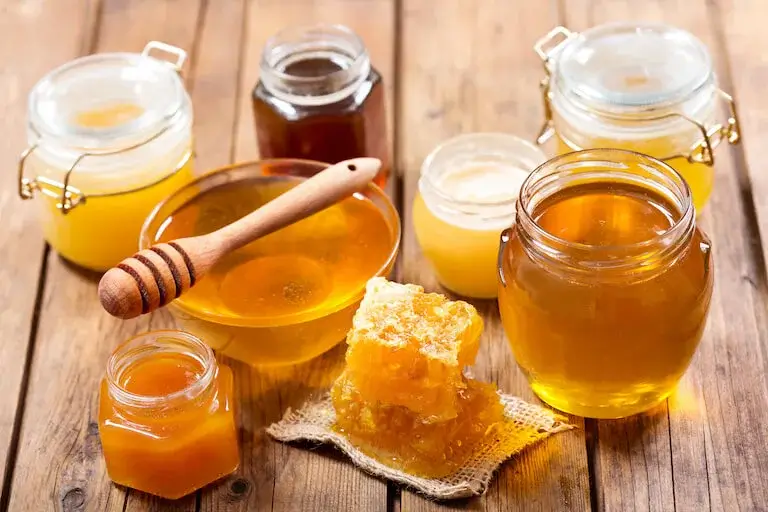
HONEY

Below, we will discuss when to use honey for cooking and when to finish your meal with it. This will transform how your food tastes and looks.

Article Summary show
Honey as a cooking ingredient
When honey works best as a cooking ingredient
Baking
Sauces, glazes, and marinades
Savory dishes
What you lose when you cook honey
Honey as a finishing ingredient
Drizzling and garnishing
Adding to warm foods
Deciding on the approach to take
The texture matters
Final thoughts

Honey as a cooking ingredient

Honey changes when exposed to heat:

  • Sugars start to caramelize
  • Moisture evaporates
  • The flavor is more concentrated.

Honey may become dark or even burn very easily at high temperatures or in long cook durations.

When you cook honey, you are mostly using it to enhance:

  • Sweetness
  • Browning
  • Thickness and viscosity.

However, when overheated, honey loses the delicate flowery fragrance or aroma that makes it interesting. If you don’t care about this detailed flavor, then you can subject the honey to heat.

When honey works best as a cooking ingredient

Baking

Honey is used in baking as it:

  • Adds moisture
  • Assists in browning
  • Gives tenderness.

It works especially well in:

  • Quick breads
  • Muffins
  • Cakes
  • Granola.

Honey is a hygroscopic food. Consequently, it draws and retains moisture. Baked goods made of honey tend to be soft over a long period. You are not depending on honey to add taste here. You are depending on its practical qualities.

Sauces, glazes, and marinades

Honey can be used in marinades and sauces. It will neutralize acidity and give a shiny surface finish. When cooked slowly, it softens liquids and tames harsh flavors.

Honey encourages caramelization in glazes. That is why it is commonly used when roasting or grilling.

Timing matters. Adding honey early and on high heat might cause a bitter taste. Adding it late will give you more control.

Savory dishes

Honey serves as a neutralizing agent in savory cooking. Even a little can:

  • Soften bitterness
  • Calm spice
  • Harmonize salt.

Cooked honey balances the flavor. This renders it convenient for:

  • Soups
  • Stews
  • Braises.

Use it when you want the sweetness to be delicate and unobtrusive.

What you lose when you cook honey

To cook honey is to lose part of what makes it different. Heat will diminish the aroma and depth. And in prolonged cooking, the honey will behave more like any other sugar.

When you are working with a highly flavored or more specialized honey, those distinctive flavors will not withstand prolonged heat exposure. That does not imply it is going to go to waste. But you will not be able to taste what makes that honey special.

Honey as a finishing ingredient

When honey comes from specific regions or Honey Farms, finishing dishes with it allows those natural flavors to come through more clearly. In many situations, it is added after cooking or just before serving. You get to taste, smell, and feel its natural flavor and aroma.

Drizzling and garnishing

A drizzle of honey provides contrast. You taste some sweetness against the heat, salt, or acidity. The taste strikes instantly. This works well with:

  • Roasted vegetables
  • Cheese boards
  • Yogurt and fruit
  • Toast and flatbreads.

Since honey is not subjected to heat, it preserves its floral aroma. You will taste the flavor.

Adding to warm foods

Honey is also good to stir into warm food that is not going to cook further. For example:

  • Oatmeal
  • Slightly cooled tea
  • Warm sauces that are off the burner.

In such instances, honey dissolves readily. But it retains much of its originality.

Deciding on the approach to take

Ask yourself: What do you want honey to do?

Use honey as a cooking ingredient when:

  • Sweetness must be incorporated.
  • You desire browning or moisture.
  • You don’t care about the complexity of flavor.

Use honey as a finishing ingredient when:

  • You want to taste the actual honey.
  • Flower notes and aroma are important.
  • Contrast matters in the dish.

Some dishes are enhanced by both. You can cook with honey to provide structure and balance. Then, drizzle a little of it on the surface to give the surface some flavor back.

The texture matters

The texture of honey changes depending on the timing.

When it is cooked and added to dishes, it thickens and binds. Finishing honey, on the other hand, lies on the surface. You feel how sticky it is and the way it slides over food.

That contrast may be deliberate. A drizzle-like layer on creamy foods gives them flavor that cooked sweetness cannot provide.

Final thoughts

Honey is more than a sweetener. It acts in a different way based on the time and manner you use it.

Cooking with honey requires timing and balance. Finishing with it allows you to feel the flavor and texture. When you consider honey in these two uses, you will use it in a more mindful way.


Previous Post

HOW TO INTEGRATE THAI CURRY PASTE INTO YOUR DISHES

Next Post

Our Top-Tested Tricks for Separating, Boiling, and Poaching Eggs

Manuel D. Walker

Manuel D. Walker

As a person of interest in the kitchen, I love creating recipes, photographing food, and sharing them with you. I'm always trying new foods, and I make sure to cook and eat everything I photograph. I love to explore and experience new cuisines and cooking methods. I've been cooking since I was 12 years old and I have more than 50 cookbooks on my shelves. I have recently created a website that focuses on the food side of my life. You can read more about it here.

Next Post
Our Top-Tested Tricks for Separating, Boiling, and Poaching Eggs

Our Top-Tested Tricks for Separating, Boiling, and Poaching Eggs

No Result
View All Result

Today Trending

  • Surprising Benefits of Outdoor Pizza Ovens 

    Surprising Benefits of Outdoor Pizza Ovens 

    0 shares
    Share 0 Tweet 0
  • The new 1865 Craft House and Kitchen serves fresh, modern American cuisine in an upbeat environment

    0 shares
    Share 0 Tweet 0
  • Raindrop’s Cafe Where Native American Cuisine Meets The Community

    0 shares
    Share 0 Tweet 0
  • 5 Best Gujarati Sweets To Try At Home: From Shrikhand To Mohanthal And More!

    0 shares
    Share 0 Tweet 0
  • The Revenue Model Of Food Festivals: Is It Scalable?

    0 shares
    Share 0 Tweet 0

Latest Post

Refreshing Logan Cucumber Salad Recipe

Refreshing Logan Cucumber Salad Recipe

April 26, 2026
Refreshing Logan Cucumber Salad: A Summer Delight

Refreshing Logan Cucumber Salad: A Summer Delight

April 26, 2026
Unlocking the Health Benefits of Sabja Seeds

Unlocking the Health Benefits of Sabja Seeds

April 26, 2026
  • Home
  • About Us
  • Contact Us
  • Cookie Policy
  • DMCA
  • Disclaimer
  • Privacy Policy
  • Terms of Use

Copyright © 2026, thekitchngic - All Rights Reserved To Us

No Result
View All Result
  • Home
  • Recipes
    • Cooking For Kids
    • Cooking Tips
  • Food
    • Baked Foods
      • Cake
      • BBQ Grilling
  • Dessert
    • Coffee
    • Ice Cream
    • Sweets
  • Fast Food
    • American Cuisine
    • Chinese Food
    • Italian Cuisine
    • Mughlai Cuisine
    • Foods And Culinary
    • Sea Food
    • Turkish Cuisine
    • Pizza
  • Catering
  • Diet And Nutrition
    • Organic Food
      • Juices
    • Proteins And Vitamins
  • Restaurants
  • Contact Us
  • Pages
    • About Us
    • DMCA
    • Cookie Policy
    • Terms of Use
    • Disclaimer
    • Privacy Policy

Copyright © 2026, thekitchngic - All Rights Reserved To Us

Welcome Back!

Login to your account below

Forgotten Password?

Create New Account!

Fill the forms bellow to register

All fields are required. Log In

Retrieve your password

Please enter your username or email address to reset your password.

Log In